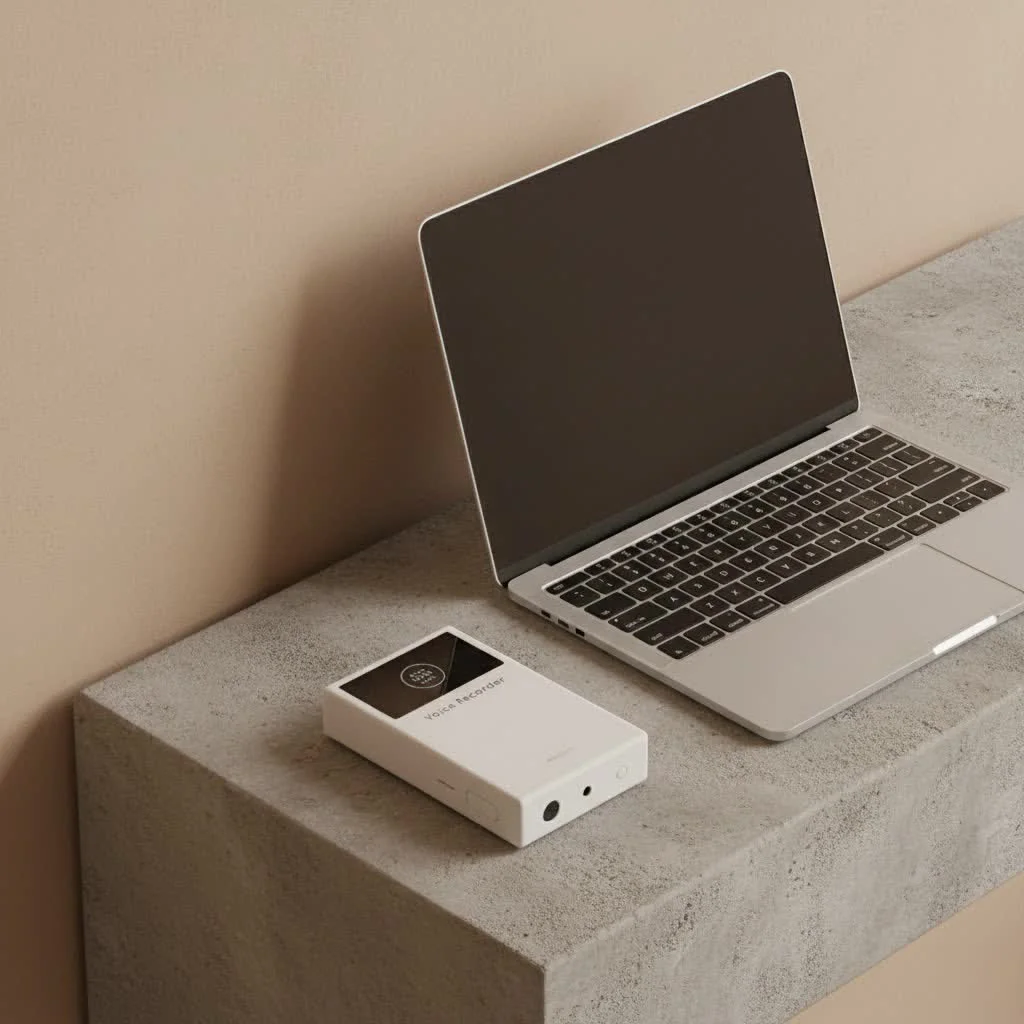
A voice memo recorder is a portable electronic device designed to capture and store audio, primarily speech, offering superior audio quality, extended battery life, and specialized features compared to smartphone apps. These devices are indispensable for students, professionals, and creatives who need to reliably document lectures, meetings, interviews, or spontaneous ideas with pristine clarity. Modern voice memo recorders are predominantly digital, compact, and provide vast storage, making them dedicated auditory notebooks for converting spoken words into easily retrievable digital files.
What Exactly is a Voice Memo Recorder?
At its core, a voice memo recorder is a device designed to capture and store audio, typically speech. While early versions were clunky analog machines, today’s voice memo recorder is predominantly digital, offering compact size, vast storage, and crystal-clear sound. Think of it as a dedicated auditory notebook, ready to capture your thoughts, conversations, or lectures without the distraction of a smartphone or the formality of a full recording studio setup. These specialized tools excel at converting spoken words into digital files, making them easily retrievable, playable, and often, shareable. For complete voice recorder library on this site.
Why You Need a Dedicated Voice Memo Recorder (Beyond Your Smartphone)
Many might wonder, “Why do I need a separate voice memo recorder when my smartphone can do the job?” It’s a fair question, but the advantages of a dedicated device are significant and often critical for quality and reliability.
Firstly, superior audio quality is a major upgrade. While smartphone microphones are decent for casual use, dedicated voice memo recorders feature high-fidelity microphones, often with stereo capabilities and advanced signal processing. This translates to richer, clearer audio, especially in challenging environments with background noise or distant speakers.
Secondly, extended battery life is paramount. Your phone is a multi-tasking hub, constantly draining power. A voice memo recorder, designed for a single purpose, can offer dozens, sometimes even hundreds, of hours of continuous recording on a single charge, ensuring you never miss a beat during long conferences or full days of lectures.
Thirdly, specialized features set them apart. Think advanced noise cancellation, multiple microphone patterns (omnidirectional for group discussions, directional for interviews), voice-activated recording (VOR) that pauses during silence to save space, and intuitive scene modes optimized for different environments like “Meeting” or “Lecture.”
“A dedicated voice memo recorder minimizes distractions and maximizes recording quality, allowing you to focus purely on capturing the moment,” notes Dr. Elara Vance, Senior Audio Technologist at Ukrbl.com. This focus also extends to reliability and security. Your phone could receive a call, text, or notification mid-recording, interrupting or corrupting your file. A dedicated device offers a distraction-free recording environment and often greater control over file security and storage without mingling with personal apps.
Key Features to Look for in a Voice Memo Recorder
Choosing the right voice memo recorder involves understanding the features that truly matter for your specific needs.
Audio Quality & Microphones
|
Our Picks for the Best Voice Recorder in 2026
As an Amazon Associate I earn from qualifying purchases.
|
||
| Num | Product | Action |
|---|---|---|
| 1 | 64GB Digital Voice Recorder with Playback: Voice Activated Recorders for Lectures Meetings Interviews - EVISTR Dictaphone Recording Device Tape Recorder Portable Mini, Audio Recorder with USB, MP3 |

|
| 2 | 128GB Digital Voice Recorder for Lectures Meetings - EVIDA 9296 Hours Voice Activated Recording Device Audio Recorder with Playback,Password |
|
| 3 | 132G (9800 Hour) Voice Activated Recorder - Elasound Voice Recorder with AI-Intelligent Triple Noise Reduction, Portable Audio Recorder for Work, Lectures, Meetings, 100H Continuous Recording Device |
|
| 4 | Sony ICD-UX570 Digital Voice Recorder, ICDUX570BLK, usb |
|
| 5 | Magnetic Voice Activated Recorder - (7000 Hours) Voice Recorder with DSP 5.0-AI Noise Cancellation - 64GB Portable Recording Device, Voice Recorder with Playback for Work, Meetings, Lectures |
|
| 6 | Digital Voice Recorder 16GB Voice Recorder with Playback for Lectures - USB Rechargeable Dictaphone Upgraded Small Tape Recorder Device |
|
| 7 | 128GB Voice Recorder - ZIPCIDE Digital Voice Activated Recorder with Intelligent Noise Reduction, Professional Dictaphone Tape Recording Device with Playback for Lectures Meeting/Classes/Interview |
|
| 8 | soundcore Work by Anker, Portable Al Voice Recorder, AI Note Taker, Al Transcription & Summarization, 6-Month Pro at No Charge, Cross-Meeting Summary, MFi Certified, Privacy Protection, Black |
|
| 9 | Digital Voice Recorder with Playback Recording Device with Screen & AI Noise Cancellation MP3 Player, 1600H Recording, Auto-Save for Meetings, Lectures, Interviews (128, GB) |
|
| 10 | AI Digital Voice Recorder 128GB: AI Transcribe & Summarize Voice Activated Recorder with Playback - OTG - Portable Tape Recorder for Meeting & Lectures |
|
This is where the rubber meets the road. Look for recorders that support uncompressed WAV format for professional-grade audio, though MP3 is excellent for everyday use due to smaller file sizes. Pay attention to the bitrate and sample rate; higher numbers generally mean better fidelity. Many high-quality recorders offer stereo microphones for a more immersive soundscape, and some even allow external microphone input for ultimate flexibility. Advanced noise reduction technology can significantly clean up recordings from noisy environments.
Battery Life & Storage
Consider how long you need to record and how often you can recharge. Battery life can range from 10 to over 50 hours of continuous recording. For storage, 4GB might be enough for casual notes, but 8GB, 16GB, or even 32GB become essential for extensive lectures, interviews, or professional projects, especially when recording in high-quality WAV format. Many devices also offer expandable storage via microSD cards.
Ease of Use & Interface
An intuitive interface and clear display are crucial. You want to be able to start, stop, and manage recordings quickly and efficiently, even in low light or stressful situations. Physical buttons often provide a more tactile and reliable experience than touchscreens for recording operations.
Connectivity & Transfer
Most modern voice memo recorders use USB-C for fast data transfer and charging. Some advanced models offer Wi-Fi or Bluetooth connectivity for wireless file transfer to computers or smartphones, making it easy to share or back up recordings to cloud services.
Advanced Functionality
Beyond basic recording, features like voice-activated recording (VOR) are incredibly useful for saving battery and storage by only recording when sound is detected. Playback speed control helps when transcribing, and scene modes automatically adjust settings for optimal recording in various environments. Some devices even offer basic on-device editing capabilities.
Durability & Portability
If you’re always on the go, a robust, compact, and lightweight voice memo recorder is key. Look for solid build quality that can withstand daily wear and tear.
Choosing the Right Voice Memo Recorder for Your Needs
The “best” voice memo recorder isn’t a one-size-fits-all answer; it depends entirely on your primary use case.
For Students: Lectures, Study Notes
Students need reliability, long battery life, and clear audio for lectures. Features like scene modes for large halls, ample storage, and easy file organization are vital. A voice memo recorder with voice-activated recording can be a lifesaver for catching key points without having to constantly monitor. Look for devices that allow for simple transfer of files to a laptop for note-taking and archival.
For Professionals: Meetings, Interviews, Dictation
Professionals demand high-quality, discreet recording with robust security. Excellent noise cancellation, stereo microphones for capturing multiple speakers, and secure file encryption are often important. For dictation, quick start recording and easy navigation through files are key. Some advanced recorders even come with transcription software integration.
For Creatives: Songwriting, Field Recording, Personal Journals
Creatives might prioritize high-fidelity audio, wide dynamic range, and the ability to connect external microphones for specific recording needs. Portability and durability are also critical for field recordings. Long battery life ensures you capture every spontaneous burst of inspiration.
For Everyday Use: Quick Reminders, Personal Thoughts
For simple, daily use, ease of use and instant access are paramount. A compact voice memo recorder that’s always ready to capture a quick thought or a shopping list is ideal. Simplicity over advanced features is often preferred here.
Pro Tips for Getting the Best Recordings
Even the most advanced voice memo recorder can’t compensate for poor technique. Here are some pro tips to ensure your recordings are always top-notch:
- Placement is Key: Position your voice memo recorder as close as possible to the sound source (the speaker) without being intrusive. For interviews, placing it centrally between speakers works well. Avoid covering the microphones or placing the device on vibrating surfaces.
- Monitor Your Levels: If your recorder has a level meter, keep an eye on it. You want the levels to be strong but not “clipping” (going into the red), which causes distortion. If it’s too low, the recording will be faint and noisy.
- Minimize Background Noise: Choose the quietest environment possible. Turn off fans, air conditioners, and close windows if street noise is an issue. Even small changes can make a big difference.
- Practice Makes Perfect: Before a critical recording, do a short test run in the same environment. This helps you check levels, microphone placement, and identify any unexpected background noises.
- Organize and Back Up: Develop a system for naming and organizing your recordings immediately. Transfer important files to your computer, an external hard drive, or cloud storage regularly to prevent loss.
Frequently Asked Questions
What’s the difference between a voice memo recorder and a dictaphone?
While often used interchangeably, a dictaphone traditionally refers to a recording device specifically designed for dictation, often with specific features for easy playback and transcription by an assistant. A voice memo recorder is a broader term for any portable device used to capture spoken audio, serving a wider range of purposes from personal notes to lectures.
Can I transcribe my voice memos automatically?
Yes, many modern voice memo recorders and their accompanying software, or third-party transcription services, offer automated transcription. While not always 100% accurate, especially with multiple speakers or poor audio quality, these tools can provide a valuable first draft of your recordings.
How long do voice memo recorders typically last?
With proper care, a high-quality voice memo recorder can last for many years. Battery life (for a single charge) varies significantly by model and usage, from 10 to over 50 hours of continuous recording. The device’s lifespan largely depends on its build quality and how well it’s maintained.
Are voice memo recorder apps as good as dedicated devices?
For quick, casual notes, smartphone voice memo recorder apps are incredibly convenient. However, dedicated devices generally offer superior audio quality, longer battery life, more robust features (like advanced noise cancellation and specialized microphones), and a distraction-free recording environment, making them better for critical or professional applications.
What’s the best file format for voice memos?
For the highest quality and post-production flexibility, uncompressed WAV (Waveform Audio File Format) is often preferred. For general use, archiving, and sharing where file size is a concern, MP3 (MPEG-1 Audio Layer III) is an excellent choice, offering a good balance between quality and compression.
Conclusion
A voice memo recorder is more than just a piece of technology; it’s an extension of your memory and a powerful tool for capturing the spoken word in a world that moves at an incredible pace. By understanding the key features, choosing the right device for your specific needs, and employing effective recording techniques, you can ensure that every crucial detail, every brilliant idea, and every important conversation is preserved with clarity. Explore the possibilities, embrace the power of precise audio capture, and let your voice memo recorder be an invaluable asset in your daily life. Your insights, notes, and memories deserve to be heard, loud and clear.
Frequently Asked Questions
What is the primary difference between a voice memo recorder and a dictaphone?
A dictaphone is traditionally a recording device specifically for dictation, often with features for easy transcription. In contrast, a voice memo recorder is a broader term for any portable device capturing spoken audio, used for personal notes, lectures, or interviews. While they share functionalities, the dictaphone has a more specialized historical context.
Can voice memos be automatically transcribed into text?
Yes, many modern voice memo recorders and their accompanying software, or third-party transcription services, offer automated transcription. While accuracy can vary, especially with multiple speakers or poor audio quality, these tools provide a valuable first draft of your recordings, saving significant manual effort.
What is the typical lifespan and battery performance of a voice memo recorder?
With proper care, a high-quality voice memo recorder can last for many years. Battery life on a single charge varies significantly by model and usage, ranging from 10 to over 50 hours of continuous recording. The device's overall lifespan is largely dependent on its build quality and how well it is maintained.
Are smartphone voice memo apps as effective as dedicated recording devices?
For quick, casual notes, smartphone voice memo apps are convenient. However, dedicated devices generally offer superior audio quality, longer battery life (often 10+ hours), more robust features like advanced noise cancellation and specialized microphones, and a distraction-free recording environment, making them better for critical or professional applications.
Which file format is recommended for recording voice memos?
For the highest quality and post-production flexibility, uncompressed WAV (Waveform Audio File Format) is often preferred. For general use, archiving, and sharing where file size is a concern, MP3 (MPEG-1 Audio Layer III) is an excellent choice, offering a good balance between quality and compression, typically with smaller file sizes.
Get the Best Recordings from Your Voice Memo Recorder
Follow these essential steps to ensure your voice memo recordings are always clear, strong, and free from common issues like distortion or background noise.
Position your voice memo recorder as close as possible to the sound source without being intrusive. For interviews, place it centrally between speakers. Avoid covering the microphones or placing the device on vibrating surfaces, which can introduce unwanted noise.
If your recorder has a level meter, keep a close eye on it during recording. Aim for strong levels that do not 'clip' (go into the red), as this causes distortion. Conversely, levels that are too low will result in faint and noisy recordings.
Always choose the quietest environment available for recording. Turn off any fans, air conditioners, or close windows if street noise is present. Even small adjustments to your environment can significantly improve audio clarity.
Before any critical recording session, perform a short test run in the same environment. This practice allows you to check audio levels, confirm microphone placement, and identify any unexpected background noises that might affect your final recording.
Immediately after recording, develop a system for naming and organizing your files. Regularly transfer important recordings to your computer, an external hard drive, or cloud storage to prevent accidental loss and ensure long-term preservation.
Get our weekly buyer guide
Practical specs, not advice. Unsubscribe anytime.
As a creative, I’m always looking for ways to capture spontaneous ideas, and a voice memo recorder has been a game-changer. The compact size means I can carry it everywhere without feeling burdened. It’s like having a dedicated auditory notebook for all my thoughts and melodies. Much better than trying to use my phone’s built-in mic in noisy environments.
I’ve been using my smartphone for voice memos for years, but the difference with a dedicated voice memo recorder is night and day. The audio quality is so much better, especially when I’m recording lectures in a large hall. The extended battery life is a huge plus too; I don’t have to worry about my phone dying halfway through a long session. Definitely worth the investment for students.
I picked up a digital voice memo recorder after reading about how useful they are for interviews. While the clarity is great and the storage is vast, I found the interface on my model a bit clunky to navigate quickly. It takes a few extra steps to start recording compared to just pulling out my phone. Still, for important interviews, the superior audio quality makes it worthwhile, just wish it was more intuitive.
I’m a professional who attends a lot of meetings, and documenting them reliably is crucial. The crystal-clear sound capture on my new voice memo recorder is fantastic for picking up every detail, even in rooms with background noise. It’s truly an indispensable tool for converting spoken words into easily retrievable digital files. My old analog machine just couldn’t compare.