In today’s fast-paced world, capturing important conversations, spontaneous ideas, or critical information with pristine clarity is more essential than ever. While our smartphones offer basic recording functions, they often fall short when professional-grade audio and robust reliability are needed. This is where a dedicated pocket voice recorder truly shines, transforming how we document our world, one crisp sound bite at a time. As someone who has spent over 15 years immersed in the world of audio recording, from field expeditions to studio sessions, I can tell you that a well-chosen pocket voice recorder is an indispensable tool, far exceeding the capabilities of a typical phone.
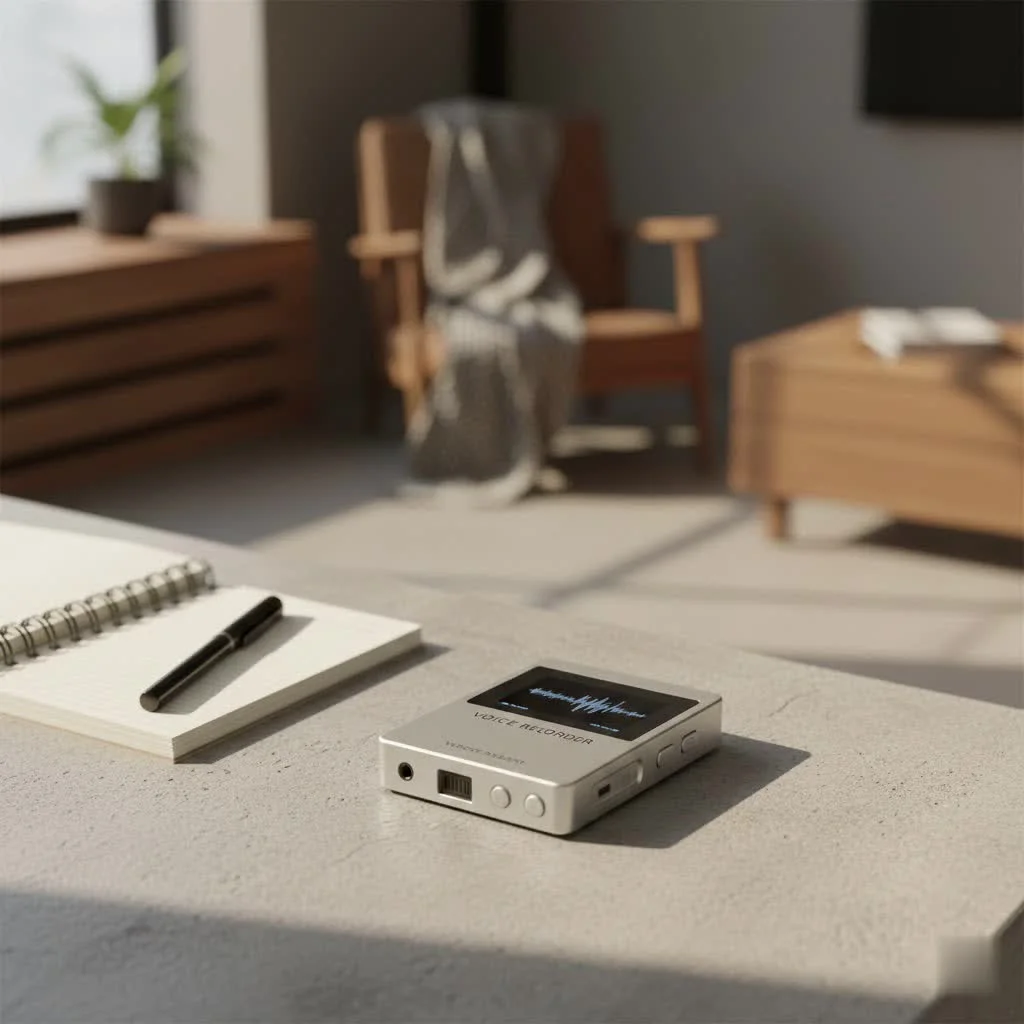
Why a Pocket Voice Recorder is a Game-Changer
Think of a pocket voice recorder as your personal audio assistant, always ready to capture sound with precision and ease. Its primary advantage lies in its specialized design. Unlike a smartphone, which juggles countless functions, a voice recorder is built from the ground up for one purpose: superior audio capture. This means dedicated microphones, advanced processing, and controls tailored for recording, leading to significantly better sound quality, reduced background noise, and unparalleled reliability. For browse all voice recorder articles on this site.
The convenience factor is also huge. These devices are lightweight, compact, and designed for quick, discreet operation. Whether you’re in a bustling conference, a quiet interview, or simply walking and needing to voice a quick thought, a pocket voice recorder is ready at a moment’s notice. It frees your phone for other tasks and provides a dedicated power source, ensuring your critical recordings won’t be interrupted by a low battery or an incoming call.
Key Features to Look for in Your Next Pocket Voice Recorder
Choosing the right pocket voice recorder can feel like navigating a maze of technical specifications. Let’s break down the crucial features that make all the difference.
Crystal-Clear Audio Quality: Beyond the Basics
This is arguably the most vital aspect. You’re aiming for recordings that are clear, rich, and free from distortion.
- Bit Depth & Sample Rate: These technical terms might sound daunting, but they’re simply measures of how much detail your recorder captures.
- Bit Depth (e.g., 16-bit, 24-bit, 32-bit float) refers to the dynamic range. Higher bit depths capture a wider range between the quietest and loudest sounds. The latest 32-bit float recording is a game-changer. It essentially eliminates the risk of digital clipping (distortion from overly loud sounds) and allows for incredible flexibility in post-production, meaning you don’t have to worry about setting perfect gain levels on the fly.
- Sample Rate (e.g., 44.1kHz, 96kHz, 192kHz) dictates how many times per second the audio signal is measured. Higher sample rates result in a more accurate representation of the original sound, which is crucial for music or detailed field recordings. For general speech, 44.1kHz or 48kHz is often sufficient, but higher rates provide more fidelity.
- Microphone Options: Most pocket recorders come with built-in stereo microphones, often arranged in an XY configuration for a natural soundstage. However, look for models that offer external microphone support via 3.5mm jacks or, for more professional use, XLR inputs with phantom power. This allows you to connect specialized lavalier mics for interviews or shotgun mics for focused audio, significantly enhancing recording quality in specific scenarios. Adjustable microphone sensitivity is also a valuable feature, letting you tailor the input to your environment.
Powering Your Recordings: Battery Life & Connectivity
|
Our Picks for the Best Voice Recorder in 2026
As an Amazon Associate I earn from qualifying purchases.
|
||
| Num | Product | Action |
|---|---|---|
| 1 | Sony ICD-UX570 Digital Voice Recorder, ICDUX570BLK, usb |

|
| 2 | Digital Voice Recorder 16GB Voice Recorder with Playback for Lectures - USB Rechargeable Dictaphone Upgraded Small Tape Recorder Device |
|
| 3 | 128GB Digital Voice Recorder for Lectures Meetings - EVIDA 9296 Hours Voice Activated Recording Device Audio Recorder with Playback,Password |
|
| 4 | Digital Voice Recorder with Playback Recording Device with Screen & AI Noise Cancellation MP3 Player, 1600H Recording, Auto-Save for Meetings, Lectures, Interviews (128, GB) |
|
| 5 | AI Digital Voice Recorder 128GB: AI Transcribe & Summarize Voice Activated Recorder with Playback - OTG - Portable Tape Recorder for Meeting & Lectures |
|
| 6 | Magnetic Voice Activated Recorder - (7000 Hours) Voice Recorder with DSP 5.0-AI Noise Cancellation - 64GB Portable Recording Device, Voice Recorder with Playback for Work, Meetings, Lectures |
|
| 7 | soundcore Work by Anker, Portable Al Voice Recorder, AI Note Taker, Al Transcription & Summarization, 6-Month Pro at No Charge, Cross-Meeting Summary, MFi Certified, Privacy Protection, Black |
|
| 8 | 64GB Digital Voice Recorder with Playback: Voice Activated Recorders for Lectures Meetings Interviews - EVISTR Dictaphone Recording Device Tape Recorder Portable Mini, Audio Recorder with USB, MP3 |
|
| 9 | 128GB Voice Recorder - ZIPCIDE Digital Voice Activated Recorder with Intelligent Noise Reduction, Professional Dictaphone Tape Recording Device with Playback for Lectures Meeting/Classes/Interview |
|
| 10 | 132G (9800 Hour) Voice Activated Recorder - Elasound Voice Recorder with AI-Intelligent Triple Noise Reduction, Portable Audio Recorder for Work, Lectures, Meetings, 100H Continuous Recording Device |
|
Nobody wants a recorder that dies mid-sentence.
- Battery Life: This is paramount. Look for devices boasting long recording times, ideally 10 hours or more on a single charge or set of batteries. Many modern recorders use rechargeable lithium-ion batteries, often charged via USB, which is incredibly convenient. Others might use common AA batteries, offering the flexibility to swap them out in the field.
- Connectivity Options: A USB port is standard for transferring files to your computer. Some advanced models offer wireless connectivity (Bluetooth or Wi-Fi) for remote control, monitoring, or even direct file transfer, which can be a real time-saver for content creators.
Storage Solutions: Never Miss a Moment
You’ll need ample space for your audio files.
- Internal Memory: Most pocket recorders come with a few gigabytes of internal storage (e.g., 4GB, 8GB).
- Expandable Storage: Crucially, many also feature SD or microSDXC card slots, allowing you to dramatically increase storage capacity. For long lectures, extensive interviews, or high-quality audio files, an expandable option is a must. A 64GB or 128GB card can store hundreds of hours of audio.
Design & Usability: Small Package, Big Impact
A great recorder is also a pleasure to use.
- Size and Weight: It’s “pocket” for a reason! Look for something truly portable that fits comfortably in your hand or pocket without being cumbersome.
- Intuitive Interface: A clear, easy-to-read LCD screen and straightforward button layout are essential for quick adjustments and hassle-free operation. You don’t want to be fumbling through menus when a crucial moment arises.
- Durability: If you plan to take your recorder everywhere, a robust build quality that can withstand the occasional bump or drop is a significant plus.
Smart Features for Smarter Recording
Modern pocket recorders often pack intelligent features designed to improve your workflow.
- Noise Cancellation: This can be a lifesaver in noisy environments, helping to filter out background hums, fan noises, or distant chatter, making speech much clearer.
- Voice Activated Recording (VOR): This feature automatically starts recording when it detects sound and pauses when there’s silence, saving storage space and making playback more efficient.
- Playback Speed Control: Useful for transcribing interviews or reviewing lengthy lectures quickly.
- File Management: Easy navigation, naming, and deletion of files directly on the device streamline your workflow.
Choosing the Right Pocket Voice Recorder for Your Needs
The “best” pocket voice recorder isn’t a one-size-fits-all answer. It depends entirely on what you plan to use it for.
For Students: Capturing Every Lecture
If you’re a student, your priority is clear audio from a distance and long battery life. You need a device that’s easy to use, quickly starts recording, and reliably captures discussions from across a lecture hall. Look for models with good built-in directional microphones and ample storage. The Sony ICD-UX570 and OM System WS-883 are often recommended for their performance in lecture environments, offering clear sound even from a few feet away.
For Interviewers & Journalists: Getting the Scoop
For interviews, clarity of speech and the ability to handle different recording environments are key. You might need to record a one-on-one conversation or a small group discussion. Recorders with good built-in stereo mics and the option for external lavalier microphones are ideal. Features like noise cancellation and adjustable mic sensitivity become very important here. The Zoom H1essential or the Tascam DR-05XP offer excellent quality and flexibility for journalists on the go.
For Musicians & Content Creators: Creative Freedom
Musicians capturing spontaneous melodies or content creators recording field audio need higher fidelity and often more advanced features. Look for recorders with 24-bit or 32-bit float recording, high sample rates (96kHz or 192kHz), and crucially, XLR inputs with phantom power to connect professional microphones. While slightly larger than some “pocket” models, compact field recorders like the Zoom H5 or even the Tascam Portacapture X8 (though pricier) provide exceptional quality and multi-track capabilities for serious audio work.
For Everyday Dictation & Personal Notes
Sometimes, you just need a simple, reliable device for voice memos, dictation, or quickly jotting down thoughts. Ease of use, quick start-up, and very long battery life are paramount. You won’t need advanced features, but clear mono recording and good internal storage are beneficial. Many entry-level digital voice recorders excel in this category, prioritizing simplicity and efficiency.
Expert Tips for Maximizing Your Pocket Voice Recorder
As a seasoned audio professional, I’ve learned a few tricks over the years to get the most out of these compact powerhouses.
- Optimal Placement is Key: Don’t just set it down anywhere! For interviews, place the recorder equidistant from all speakers. For lectures, try to get it as close to the speaker as possible, perhaps near the front of the room.
- Utilize Accessories: A simple windscreen can drastically improve outdoor recordings by reducing wind noise. If your recorder supports it, an external lavalier microphone can significantly improve speech clarity for interviews.
- Manage Your Files Regularly: Don’t wait until your memory is full. Transfer files to your computer regularly and organize them. This not only prevents losing data but also keeps your recorder ready for action.
- Experiment with Settings: Read your manual! Most recorders offer various recording modes (MP3, WAV, LPCM) and microphone sensitivity settings. Play around with them in different environments to understand what works best for your specific needs. As Dr. Anya Sharma, a renowned sound engineer, often says, “The best recording isn’t always about the most expensive gear, but understanding how to master the tools you have and knowing your environment.”
- Monitor When Possible: If your recorder has a headphone jack, use it! Monitoring your audio in real-time allows you to catch and correct issues like clipping, background noise, or incorrect microphone placement before it’s too late.
The Future is Small: Innovations in Pocket Recording
The world of pocket voice recorders is constantly evolving. We’re seeing more integration of AI for smarter noise reduction and even transcription services built directly into the device. Advanced wireless connectivity is becoming more commonplace, allowing seamless integration with other smart devices. The trend towards smaller, more powerful, and intuitively designed recorders with features like 32-bit float will continue to empower users to capture professional-grade audio without the bulk.
FAQ
Q: Is a pocket voice recorder better than my smartphone for recording?
A: Absolutely! While smartphones offer convenience, dedicated pocket voice recorders provide superior audio quality, longer battery life, specialized microphones, and features like advanced noise cancellation that phones typically lack. They are purpose-built for reliable audio capture.
Q: What does 32-bit float recording mean?
A: 32-bit float recording is a revolutionary technology that allows a recorder to capture an extremely wide dynamic range, essentially making it impossible to digitally clip or distort your audio during recording, even if the sound gets unexpectedly loud. This provides incredible flexibility during post-production to adjust levels without compromising quality.
Q: How much storage do I need for a pocket voice recorder?
A: For general dictation or short notes, a few gigabytes of internal storage might suffice. However, for long lectures, extensive interviews, or high-quality audio formats, you’ll want a recorder with expandable storage via an SD or microSDXC card. A 64GB card can hold hundreds of hours of typical voice recordings.
Q: Can I use an external microphone with all pocket voice recorders?
A: Not all pocket voice recorders support external microphones. Look for models that specifically state they have a 3.5mm mic input or, for professional-grade microphones, XLR inputs with phantom power. This feature greatly enhances recording flexibility and quality.
Q: How do I transfer files from my pocket voice recorder to my computer?
A: Most pocket voice recorders connect to a computer via a USB cable, allowing them to function like a standard external drive. You can then simply drag and drop your audio files to your computer for storage, editing, or transcription.
Q: How do I improve the audio quality of my pocket voice recorder?
A: To improve audio quality, ensure proper microphone placement (close to the source, equidistant from speakers), use a windscreen in windy conditions, enable noise cancellation features if available, and consider using an external microphone for specific situations like interviews. Experimenting with higher bit depth and sample rate settings can also yield better results.
Conclusion
A pocket voice recorder is much more than a gadget; it’s an investment in reliable, high-quality audio capture. From the subtle nuances of an important meeting to the expansive soundscape of a field recording, these compact devices empower you to preserve every crucial sound. By understanding the key features and aligning them with your specific needs, you can confidently choose a pocket voice recorder that will serve you faithfully for years to come. So, go ahead, explore the options, and elevate your audio game – the world is waiting to be heard, and your perfect pocket companion is ready to record it all.
Get our weekly buyer guide
Practical specs, not advice. Unsubscribe anytime.